
What is Badminton?
BADMINTON is a racquet sport played using racquets to hit a shuttlecock across a net. Although it may be played with larger teams, the most common forms of the game are “singles” (with one player per side) and “doubles” (with two players per side)
What are the rules in playing Badminton?
Rules
- A player must wait until his opponent is ready before serving. If the opponent attempts a return then he is ruled having been ready.
- The feet of both players must remain in a stationary position until the serve is made. Your feet can not be touching the line at this time.
- It is not a fault if you miss the shuttle while serving.
- The shuttle cannot be caught and slung with the racket.
- A player cannot hold his racket near the net to ward off a downward stroke by his opponent or to interfere with his racket.
Faults
- The shuttle, at the instant of being hit is higher than the servers waist or the head of the racket is higher than the servers racket hand.
- The shuttle does not land in the correct service court.
- The server’s feet are not in the service court or if the feet of the receiver are not in the court diagonally opposite the server.
- The server steps forward as he/she serves.
- Any player balking or feinting his opponent before serve or during serve.
- A serve or shot that lands outside the court boundaries, passes under or through the net, touches any other obstructions or a players body or clothing. The boundary and service lines are considered in play.
- The shuttle in play is struck before it crosses the net to the striker’s side of the net. You may follow through over the net.
- A player touching the net or its supports with his body or racket while the shuttle is in play.
- Hitting the shuttle twice in succession by a player or team.
Scoring System
- A match consists of the best of 3 games of 21 points.
- Every time there is a serve – there is a point scored.
- The side winning a rally adds a point to its score.
- At 20 all, the side which gains a 2 point lead first, wins that game.
- At 29 all, the side scoring the 30th point, wins that game.
- The side winning a game serves first in the next game.
Interval and Change of Ends
- A 1 minute interval between each game is allowed.
- In the third game, players change ends when the leading score reaches 11 points.
Singles
- At the beginning of the game (0-0) and when the server’s score is even, the server serves from the right service court. When the server’s score is odd, the server serves from the left service court.
- If the server wins a rally, the server scores a point and then serves again from the alternate service court.
- If the receiver wins a rally, the receiver scores a point and becomes the new server. They serve from the appropriate service court – left if their score is odd, and right if it is even.
Doubles
- A side has only one ‘set’.
- The service passes consecutively to the players as shown in the diagram.
- At the beginning of the game and when the score is even, the server serves from the right service court. When it is odd, the server serves from the left court.
- If the serving side wins a rally, the serving side scores a point and the same server serves again from the alternate service court.
- If the receiving side wins a rally, the receiving side scores a point. The receiving side becomes the new serving side.
- The players do not change their respective service courts until they win a point when their side is serving.
If players commit an error in the service court, the error is corrected when the mistake is discovered.
In a doubles match between A & B against C & D. A & B
won the toss and decided to serve. A to serve to C. A shall be the
initial server while C shall be the initial receiver.
| Course of action / Explanation | Score Love All | Service from Service Court Right Service Court. Being the score of the serving side is even. | Server & Receiver A serves to C. A and C are the initial server and receiver. | Winner of the rally A & B | |
| A & B win a point. A & B will change service courts. A serves again from Left service court. C & D will stay in the same service courts. | 1-0 | Left Service Court. Being the score of the serving side is odd | A serves to D | C & D | |
| C & D win a point and also right to serve. Nobody will change their respective service courts. | 1-1 | Left Service Court. Being the score of the serving side is odd. | D serves to A. | A & B | |
| A & B win a point and also right to serve. Nobody will change their respective service courts. | 2-1 | Right Service Court. Being the score of the serving side is even. | B serves to C | C & D | |
| C & D win a point and also right to serve. Nobody will change their respective service courts. | 2-2 | Right Service Court. Being the score of the serving side is even. | C serves to B | C & D | |
| C & D win a point. C & D will change service courts. C serves from Left service court. A & B will stay in the same service courts. | 3-2 | Left Service Court. Being the score of the serving side is odd. | C serves to A | A & B | |
| A & B win a point and also right to serve. Nobody will change their respective service courts. | 3-3 | Left Service Court. Being the score of the serving side is odd. | A serves to C | A & B | |
| A & B win a point. A & B will change service courts. A serves again from Right service court. C & D will stay in the same service courts. | 4-3 | Right Service Court. Being the score of the serving side is even. | A serves to D | C & D |
Note that this means:
- The order of server depends on the score odd or even same as in singles.
- The service courts are changed by the servicing side only when a point is scored. In all other cases, the players continue to stay in their respective service court from where they played previous rally. This shall guarantee alternate server.
Elements of the ready position
Stance
You should be ready with a somewhat wide stance: your feet a little more than shoulder-width apart. You cannot simply stand there, feet together, as though waiting for a bus!
Your weight should be lowered a little, with your knees slightly bent. Your weight should be shifted forwards a little, so that you are on the balls of your toes.
This does not mean that you should be perched uncomfortably on your tiptoes, leaning forwards so much that you almost fall over! Rather, you need to lean forwards just enough to take the weight off your heels. Failure to do this will leave you flat footed.
Your right foot should be slightly ahead of your left foot — only about half a foot length ahead. This position is effective for covering all four corners of the court.
Racket carriage
Your racket position varies a lot depending on the situation.
It should never be left to dangle near your ankles, however. Bring your racket up! Your racket should be held out in front of you, and away from your body. Typically you will hold it about waist height; but you’ll hold it higher when attacking and lower when defending.
Your left arm
Don’t forget that you have two arms! Although your left arm does not hit the shuttlecock, it affects your balance a great deal.
Your left arm should be used to balance your right arm and racket. In the ready position, this generally means holding it in front of your body and slightly out to the side.
Never leave your left arm dangling at your side!
BADMINTON COURT
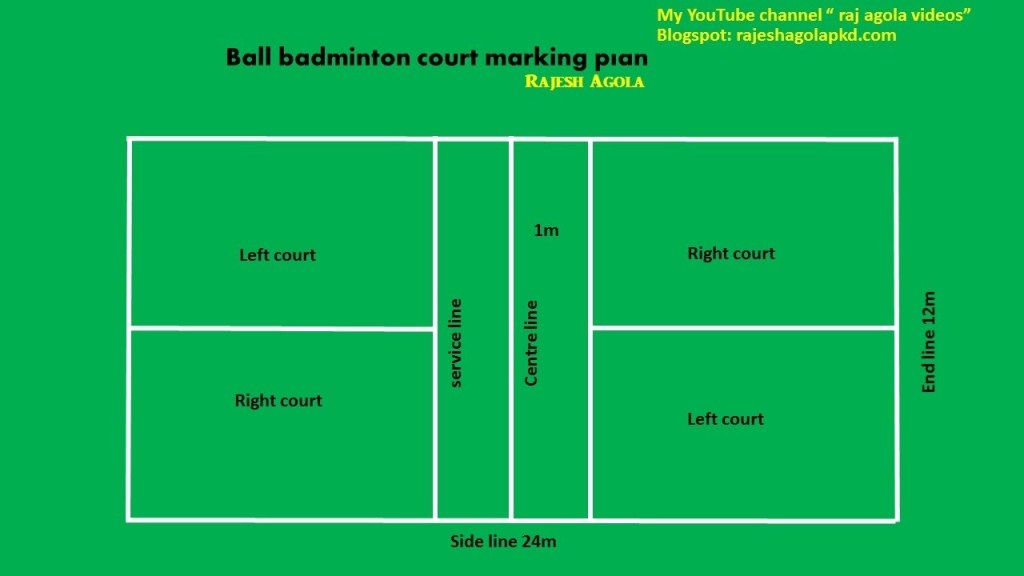
The Badminton court is 13.4m long and 6.1m wide. For singles the court is marked 5.18m wide. The lines marking out the court ate easily distiguishable and coloured white or yellow. The line are 40mm wide.
Proper Attire in Playing Badminton

The majority of players will tend to wear a polo shirt or t-shirt and a pair of shorts or skirt. It is a bad idea to wear jeans or other restrictive trousers to play in
Equipments in playing Badminton
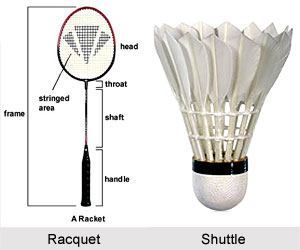
To play badminton, players will need a net, a shuttlecock, and at least two rackets.
PROPER POSITION IN PLAYING BADMINTON
Service
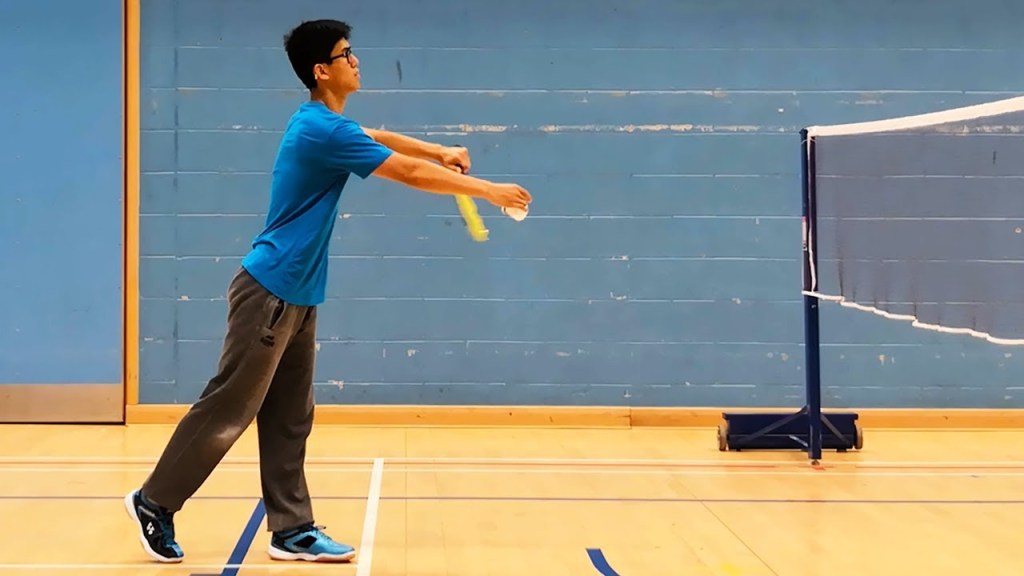
This is the main type of service in badminton and most can be executed with either your forehand or backhand. This low serve is almost a gentle tap over the net with the shuttle with the aim of flying just over the net, yet falling just over the front line of his service court.
Smash

The Smash is a shot hit with power and speed downward to your opponents court. The angle and the steepness of the shuttle’s trajectory will make it hard for your opponent to retrieve. Contact the shuttle further in front of your body than the clear or the drop shot.

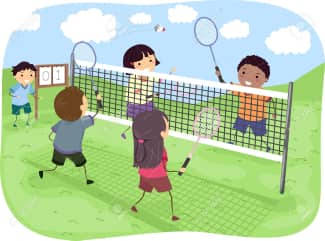
ENJOY PLAYING BADMINTON WITH YOUR FRIENDS AND CLASSMATES
 EALLYZA'S BLOG
Nice blog sis😍😍
LikeLike
thank you ate😘
LikeLike
Nice blog very informative
LikeLike
nice blog, very helpful
LikeLike
THANK YOUUUU❤
LikeLike
nICE BLOG
LikeLike
Nice
LikeLike
nice blog!!
LikeLike
Nice blog really help me out
LikeLike
The informations about badminton are accurate and your blog is properly organized.
LikeLike
Wowwwwww
LikeLike
This gave me ideas about badminton! I am not really into sports but after reading this, somehow, I’m getting interested in playing Badminton.
LikeLike
You’re great 😍 thank u for info 😚
LikeLike
❤❤❤
LikeLike
Nice! I like it
LikeLike
Nice blog. I learned more about badminton.
LikeLiked by 1 person
I love playing badminton since elementary 💕
LikeLike
Nice blog. Badminton is 💞
LikeLike
very informative. what a great Blog nice content
LikeLike
thank youuu
LikeLiked by 1 person
Good work
LikeLike
Nice blog😊
LikeLike
❤
LikeLike
NICE
LikeLike
nice blog!
LikeLiked by 1 person
Andami kong natutunan dito :))
LikeLiked by 1 person
nice blog!!!!
LikeLike
NICE BLOG
LikeLike
Nice blog
LikeLiked by 1 person
Loving this post🤗 So inspiring!🥰 Hope to see more post coming from you😍
LikeLiked by 1 person
thank youuu ❤❤❤
LikeLike
Good sport
LikeLike
Good job 😊
LikeLiked by 1 person
thank you po😊
LikeLike
Nice one!
LikeLiked by 1 person
Nice one..can give deep information and knowledge on badminton sport
LikeLike
Nice one…can give deep information and knowledge on badminton sports
LikeLike
Niceee one! Keep it up! ❤️
LikeLike
Nice one..Now I gain more knowledge on playing badminton
LikeLike